How I Have Better Sex Now at 49 Than I Had at 30 — After HRT and Supplements Failed

Hi,
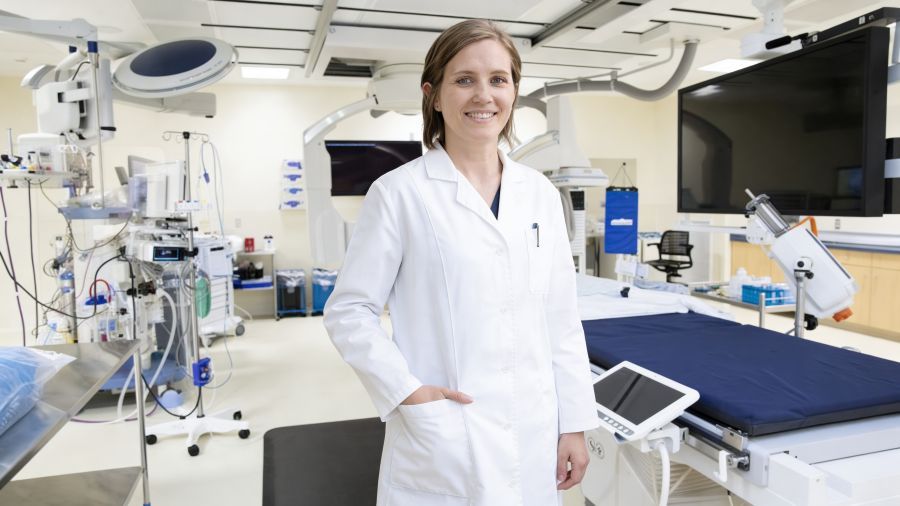
I am Dr. Samantha Kelsey. I am a cardiologist.
I fight to make people's lives longer. I've been doing it for 12 years.
I've managed heart attacks in real time. I've added decades to people's lives.
Because more time means more moments. More moments with people they love.
And then I became the patient.
I am 44. Three years ago perimenopause hit me like a punch.
The anxiety. The mental collapse.
And in the middle of all that… I noticed something different in me.
I stopped wanting sex. Completely. Just like that.
Overnight. Like a switch.
And it was devastating.
I used to feel young, vibrant, sexy. And then one day I didn't.
And that broke me more than anything else.
Not recognizing myself anymore.
I read the studies.
Women with low libido are much more likely to experience depression.
I didn't expect to feel so broken at my age.
That part of my life couldn't be over. Not already.
So I trusted the system I had worked in for 17 years.
I sat in the waiting room. On the other side.
And I was told it's not important.
But I kept looking. I turned to the market.
And I found the same dismissal everywhere.
Companies slap a menopause label on generic supplements and call it a solution.
We are half of the population. But our problems aren't taken seriously.
But I'm here to tell you: there is a way out.
If you want your sexuality back, I need you to keep reading.
This is how I have better sex now at 49 than I had at 30.
I am Samantha, a real doctor and a real woman who got through perimenopause.
I've seen enough medicine to know when something is real. And when it isn't.
The market is full of fake solutions.
I am sharing what genuinely worked for me.
I watched it work for friends. And over 50,000 women across the US are using the same solution.
You can love sex again. Sooner than you think. Keep reading.
Imagine waking up one day and... a part of you is missing.
Overnight. Like a cruel magic trick.
I had a full, passionate sexual life for my entire adulthood.
I used to get a flood of feeling when my husband gave me a hug.
And one day I was flinching at his touch.

Sex isn't just recreation.
Loss of sexual desire is clinically associated with loss of self image.
And it is one of the strongest predictors of depression in women.
This isn't just about having extra fun.
Losing desire affects your mental health.
Science is clear on this.
I felt like a stranger in my own body.
My clit got totally numb. Like rubbing cardboard. No sensation.
I used to have amazing orgasms. And now it'd take me 20 minutes to get just a flinch of that.
But the worst? The desire just died.
Zero fantasies. Zero sexual thoughts.
I'd still make the effort for my husband. And it felt like a chore.
My husband was patient. Kind. Never complained.
But something warm between us was going cold.
I could look at him and tell he is attractive.
But the idea of having sex with him? No thanks.
I stopped being a sexual person.
My Two-Year Search for a Real Solution
I personally got on HRT.
I know there are debates around it.
For me it helped with some symptoms.
But not with my desire. Not at all.
Even after one year on it. Still nothing.
So I went to see a gynecologist.
I wasn't going as a doctor. I was going as a patient. A hopeful one.
I explained everything.
The numbness. The zero desire. How long it had been going on.
She listened. Nodded.
And then she told me it was normal.
That desire naturally decreases with age.
That maybe I should get into relationship therapy.

I DO LOVE my husband. That was not the issue.
A doctor just blamed my marriage. For a biology problem.
I felt so dismissed.
I walked out with nothing.
So I turned to the market.
There were so many brands.
Supplements claiming to fix my exact problem.
All these solutions. Someone must know something.
I started with maca root.
It's effective on younger women.
I gave it four months.
I took it everyday at the recommended dose. And waited.
Not even a flicker. But I got acne on my shoulders.
So I tried the menopause supplements.
The ones with "libido" written on the label.
I gave them real time. Four different brands. Months of each.
The first few weeks on the second blend, I thought I noticed something.
A slight warmth. A faint interest.
I told my husband. He got excited.
And then it faded. Just as quietly as it had appeared.
And every month it was harder to stay hopeful.
My disinterest slowly turned into repulsion.
I started dreading my husband's touch.
One morning I looked at myself in the mirror.
That night I had intimacy out of guilt.
It had been two years. Two years of this.
I wanted to feel "sexy" again.
And I realized something.
I had spent two years waiting for someone else to find the answer.
But I'm a doctor. I know how to read a study.
I decided to dig into this myself.
My Deep Dive
I am a doctor. I know how to read a study.
So why not look myself?
I went straight to the literature.
Not cardiology papers this time.
Endocrinology journals. Neuroscience reviews. Sexual medicine research.
I spent my evenings on PubMed. For weeks.
I found researchers who spent their life on this.

And something became quickly clear.
The science exists.
It's solid, well-documented, peer-reviewed.
Just nobody was doing anything with it.
And this is what the science says:
In younger women, libido loss is just a blocker. Something stops the brain from wanting sex.
Stress. Depression. Medication.
In menopausal women it's completely different.
It's systemic. And harder to fix.
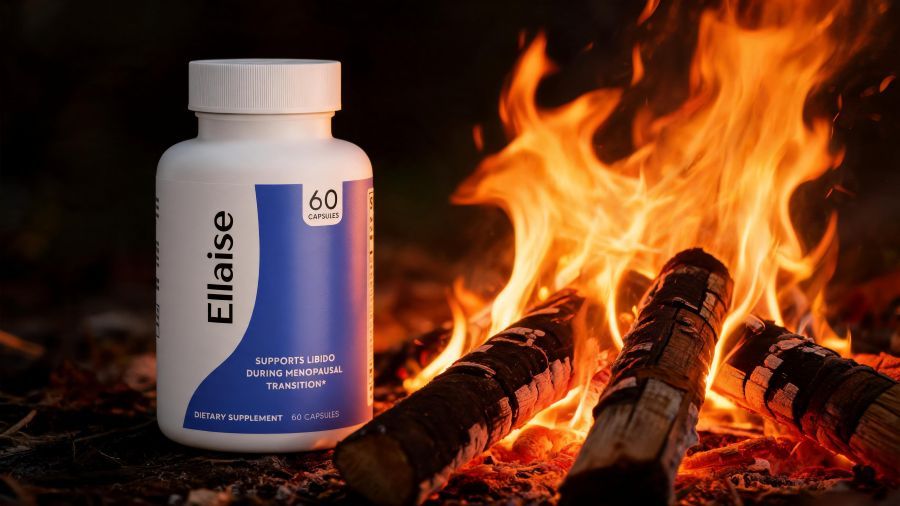
Think of your libido like a fire.
To burn, a fire needs three things: a spark, fuel, and oxygen.
During this transition, all three start disappearing. At once.

The spark fades
Testosterone is what tells your brain: "I want sex".
As it drops, that thought stops coming.
No spark. The fire doesn't ignite.
The fuel runs out
Estrogen keeps your body responsive.
Sensation. Blood flow. The ability to reach orgasm.
As it drops, sex becomes duller.
It's not so pleasurable anymore.
The fire gives less heat.
And the brain notices over time.
So you stop spontaneously wanting sex.
And something starts stealing the oxygen
Hormonal decline breaks your stress response.
Cortisol rises and stays high.
And under stress, your body doesn't care about sex.
The fire was already struggling.
Now it's being suffocated.
Three things failing at once.
Each one makes the others worse.
And it can feel like a switch.
Because hormonal decline isn't gradual. It's sudden.
So what does a real solution need to do?
It needs to work on all three.
The spark needs to return
Testosterone needs to rise.
So your brain wants sex again.
And fantasies come back.
And you think about sex during the day. Spontaneously.
The fire needs to be fueled
Blood flow to intimate tissue needs to recover.
Sensation needs to return.
Lubrication. Engorgement. Real orgasm.
So the fire feels warm again.
And the brain registers the pleasure.
It starts wanting sex again.
Because it remembers it's worth it.
The suffocation has to stop
Stress needs to come under control.
Cortisol needs to settle.
So your body can care about sex.
The fire can finally breathe.
This isn't simple.
Three systems. All off balance.
And each one needs its own fix.
And you know how the market is trying to solve this?
There are supplements made for men.
Dosed for men. Tested on men.
Then someone put a pink label and sold it for menopause.
Same ingredients. Same doses. Different box.
The rest? Made for younger women.
They showed some results. On younger women.
And someone got the great idea of selling them to us.
Like our problem is the same problem.
It isn't.
Nobody tried to build something for us.
Nobody even tried to understand what we actually need.

And women are paying the price
It only gets worse over time. The data is brutal.
76% of menopausal women with low libido develop clinical depression. [ Schnatz 2010, Journal of Women's Health ]
That's 3 women out of 4. Clinical depression.
Not sadness. Not feeling down.
Clinical depression. Diagnosed. Real.
7 in 10 women with low libido start feeling ugly in their own body. [ Kingsberg 2014, Journal of Women's Health ]
They stop feeling attractive. Desirable. Sexy.
They look in the mirror and don't like themselves anymore.
They stop wanting to be looked at.
And the sad part? It has nothing to do with how they look.
Desire affects how you see yourself.
Scientists measured its impact on quality of life.
They put a number on this.
It ranks alongside diabetes and hypertension. [ Biddle 2009, Value in Health ]
That's not a small thing.
It affects your whole life.
And it hits relationships too.
Lack of intimacy causes 1 in 3 divorces. [ Forbes Advisor survey, 2023, conducted by OnePoll, n=1,000 divorced Americans. ]
Two people who loved each other.
Undone by something that could have been fixed.
How I heard about Ellaise
I was running out of hope.
Two years of trying. Two years of nothing.
But I still had one move left.
I opened up to the women I worked with.
Friends that I laughed with. With also a medical background.
Women that aren't easy to fool.
One of them is Dr. Eleanor Voss.
Neurologist. Fifteen years of practice.
The most evidence-driven person I know.
She listened to everything I told her.
She just nodded.
And when I finished, she told me she knew what I meant.
She had been through something similar.
She looked everywhere.
And she eventually found something that worked.
I asked what it was.
She first described what it did for her.
Feelings she had missed. Gradually coming back.
Feeling wanted. Feeling sexy.
Rediscovering a lost version of herself.
Then she finally dropped the name.
Ellaise.
I had never heard of it.
My first instinct was familiar.
Another supplement.
Another promise dressed up nicely.
But Eleanor walked me through it.
The research behind it.
Why she thought it was different.
She wasn't excited or evangelical.
Just methodical. As she always is.
I didn't drop all the skepticism.
But I got curious.
Eleanor doesn't recommend something she hasn't vetted.
I decided to reach out to them.
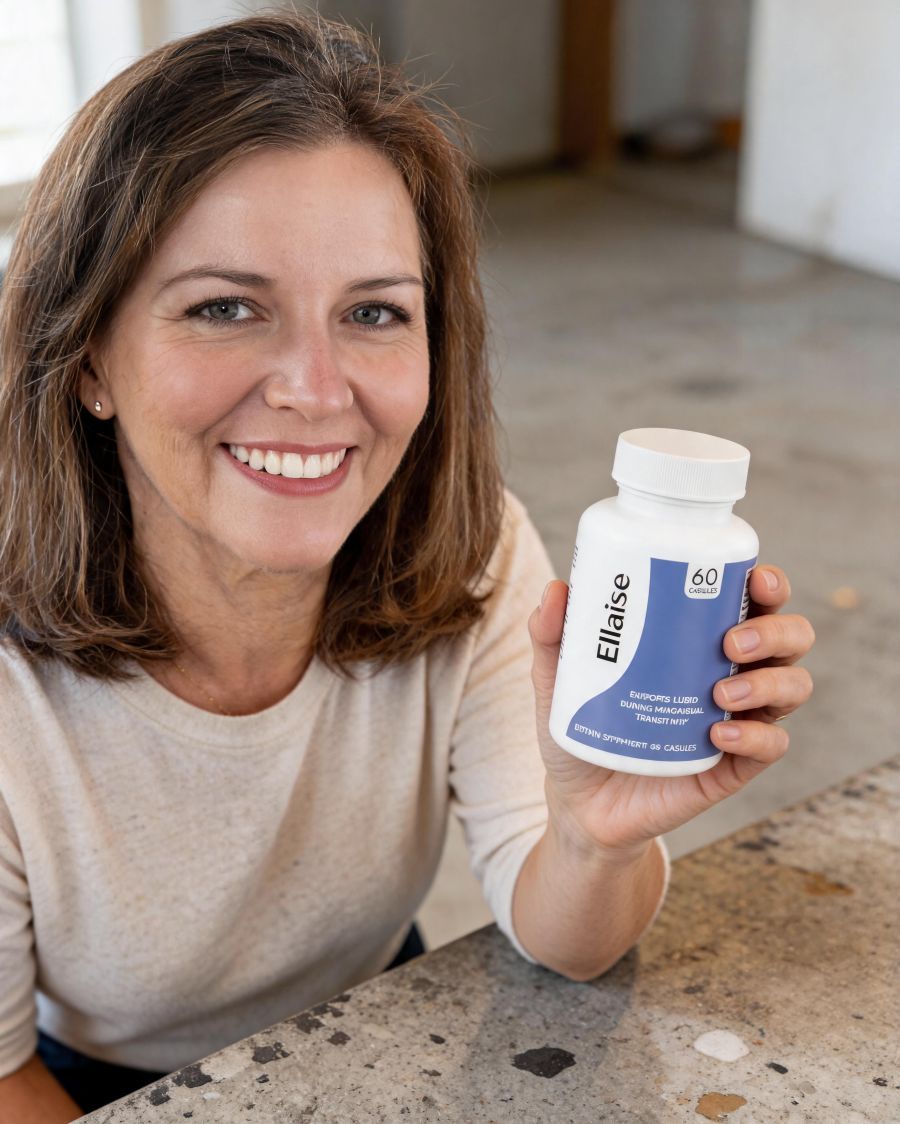
I'm 44. The sex drive started slipping a couple of years ago and got bad enough that my boyfriend asked me about it gently a while back. That was the conversation that made me actually try to do something.
I bought two supplements. Took them as directed. Neither one did anything I could feel. After the second one I figured this was just how I was now and stopped looking. Didn't want to keep paying $40 a month to be disappointed.
Got Ellaise after I read about it somewhere.
The shift is small but it's real. I've started getting flickers of wanting again, mostly at night, sometimes when I'm not expecting it. Last week I actually reached for him first, which I haven't done in I can't even tell you how long. He didn't make a big deal out of it but I know he noticed.
So. Something's happening.
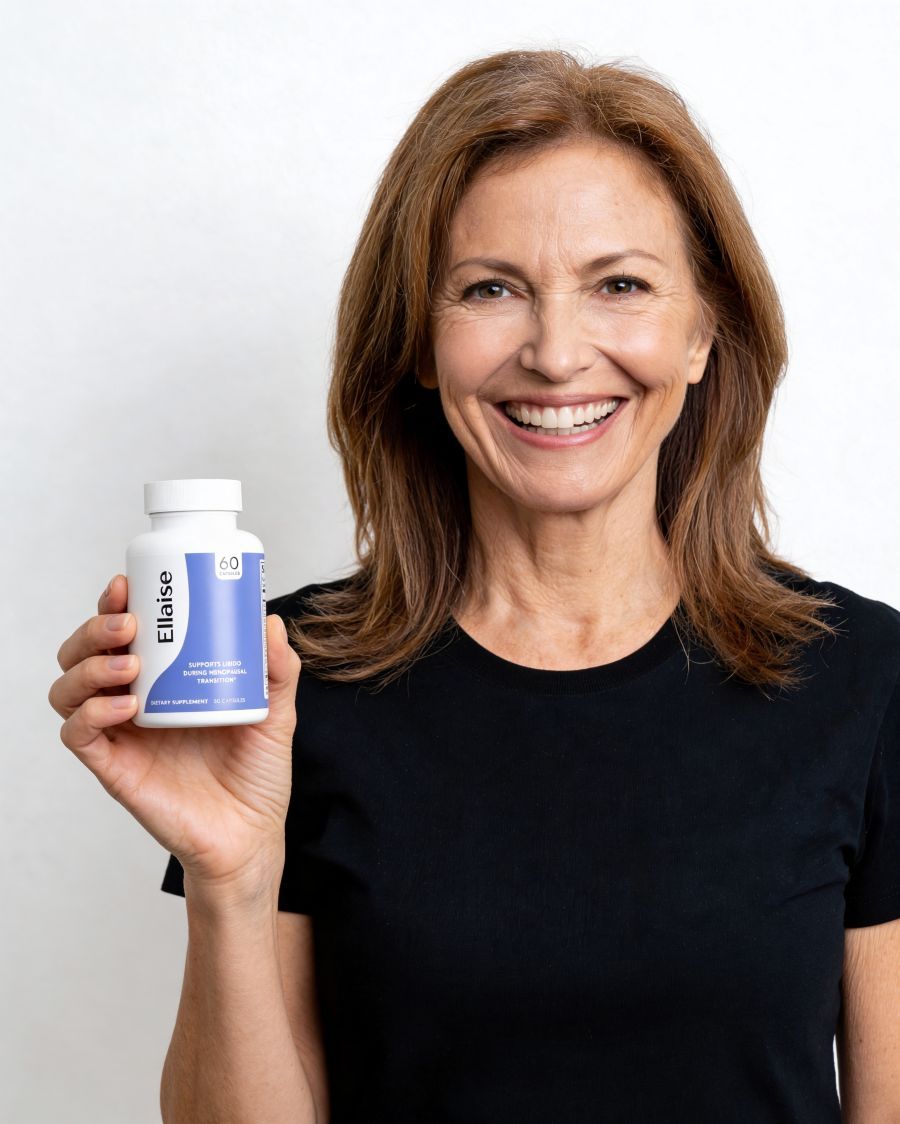
My husband and I joke that menopause stole my personality and replaced it with a woman who really likes cardigans. The libido was the first thing to go. By like, a lot. I told my sister last year that if a Hemsworth showed up at my door I'd offer him a snack and send him on his way.
Tried the gummies. Tried the powders. Tried a thing my friend swore by that smelled like a barn. My GYN put me on testosterone cream which did help my body feel less like a sandbox but the wanting part was still on permanent vacation.
A friend mentioned Ellaise at brunch. I bought it from the parking lot before I even drove home, that's how desperate I am at this point. Took it for about three weeks before anything registered.
Then random sexy thoughts started showing up in my day. Standing at the sink, driving to work, whatever. Stuff I hadn't thought about in years. I caught myself actually looking at my husband in the kitchen one morning, like really looking. And I was getting wet again without it being a whole production.
Something switched back on.
Anyway. Buying another bottle.

I'm 56 and three years past my last period. Sex drive started winding down at maybe 51 and was effectively gone by 54. I am a person who knows what she wants, and I wanted that part of myself back. It wasn't about my husband. It was about me.
Tried a couple of supplements over the years. One was a mushroom blend, the other I genuinely don't remember. Neither did anything I could feel. By the time I got to Ellaise I was mostly out of patience.
Here's what's different. I think about sex now. Not all the time, but it crosses my mind during the day in a way it hasn't in years. I bought a new vibrator last month, which I'd given away to a friend at one point because I figured I was done. And the orgasms when I do have them are sharper, more like they used to be, instead of the watered-down version I'd resigned myself to.
That's worth what I'm paying for it.

I don't usually do this kind of thing. I'm writing it because something a stranger wrote a year ago is part of why I gave Ellaise a try, so I figure I owe somebody.
I'm 49. The libido went somewhere around 46 and never wrote back. I'm someone who used to like sex a lot. That part of my life closing without my permission was hard to make peace with, and after a while I stopped trying to and just got on with things.
I'd been on HRT for over a year. Estrogen patch, progesterone, the whole protocol. It helped my sleep, my joints, the brain fog. Did very little for the libido. My doctor floated testosterone and I didn't want to go down another road of bloodwork and adjustments.
Started Ellaise in late summer. I almost stopped after the first bottle because I wasn't sure anything was happening.
Then I noticed I was actually present during sex with my husband instead of mentally checking out. That was the first thing. The wanting didn't come back like a switch. It came back as me not leaving my own body when we were trying.
I'm still on it.
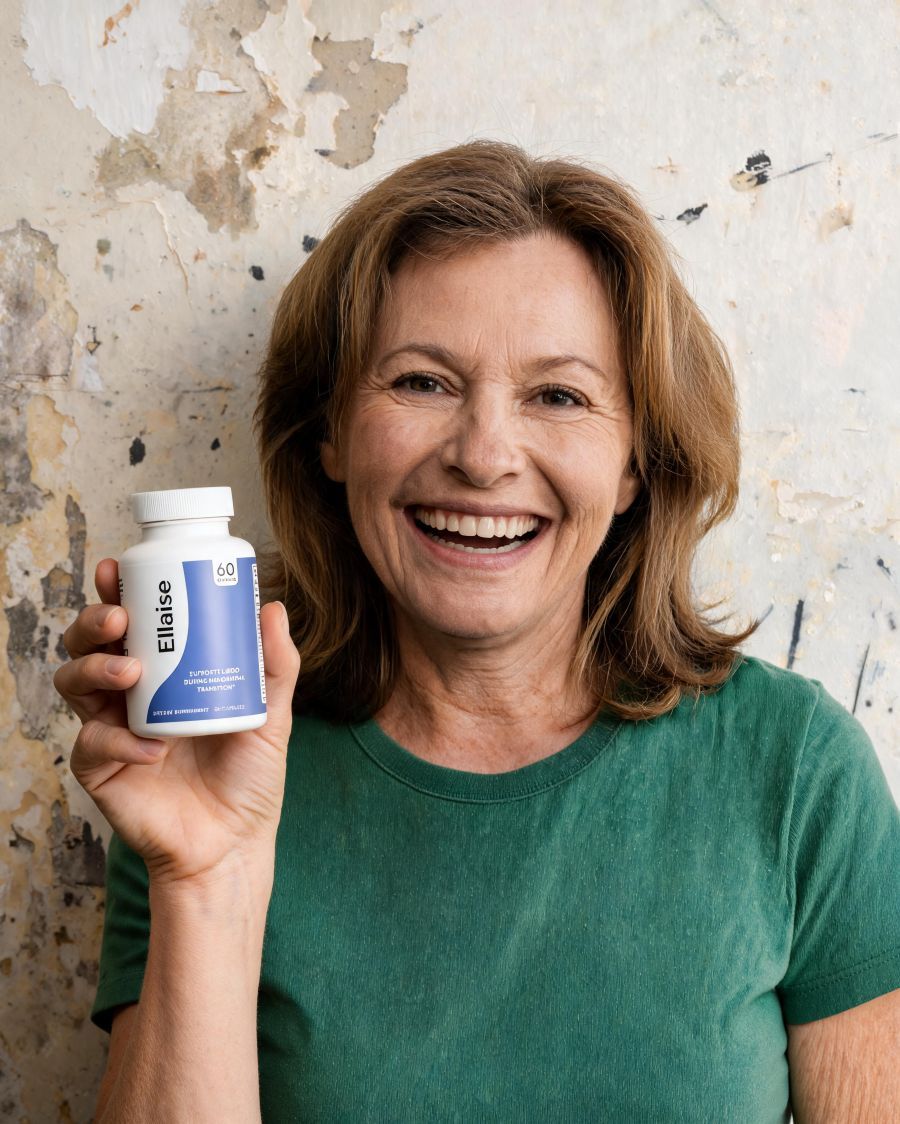
I'm 46. Two kids, full time job, the whole thing. Peri started maybe two years ago and the sex drive went first. My husband and I have been together since college and we used to be good. Then I just stopped wanting it. Not because of him. I'd lay there at night and feel nothing where there used to be something.
What I tried before this: maca, two rounds of bioidentical pellets that cost a fortune, a gel from my doctor, more vitamin D than a person should take. The pellets did something for like six weeks then nothing. Everything else, nothing.
Ellaise is what's working for me.
A few sexual thoughts have come back. Not a lot. More than zero, which is where I was for a long time. And I stopped dreading bedtime. I don't exactly look forward to it but I don't mind anymore, and going from quietly bracing every night to just not minding is something for me.
I'll keep taking it.
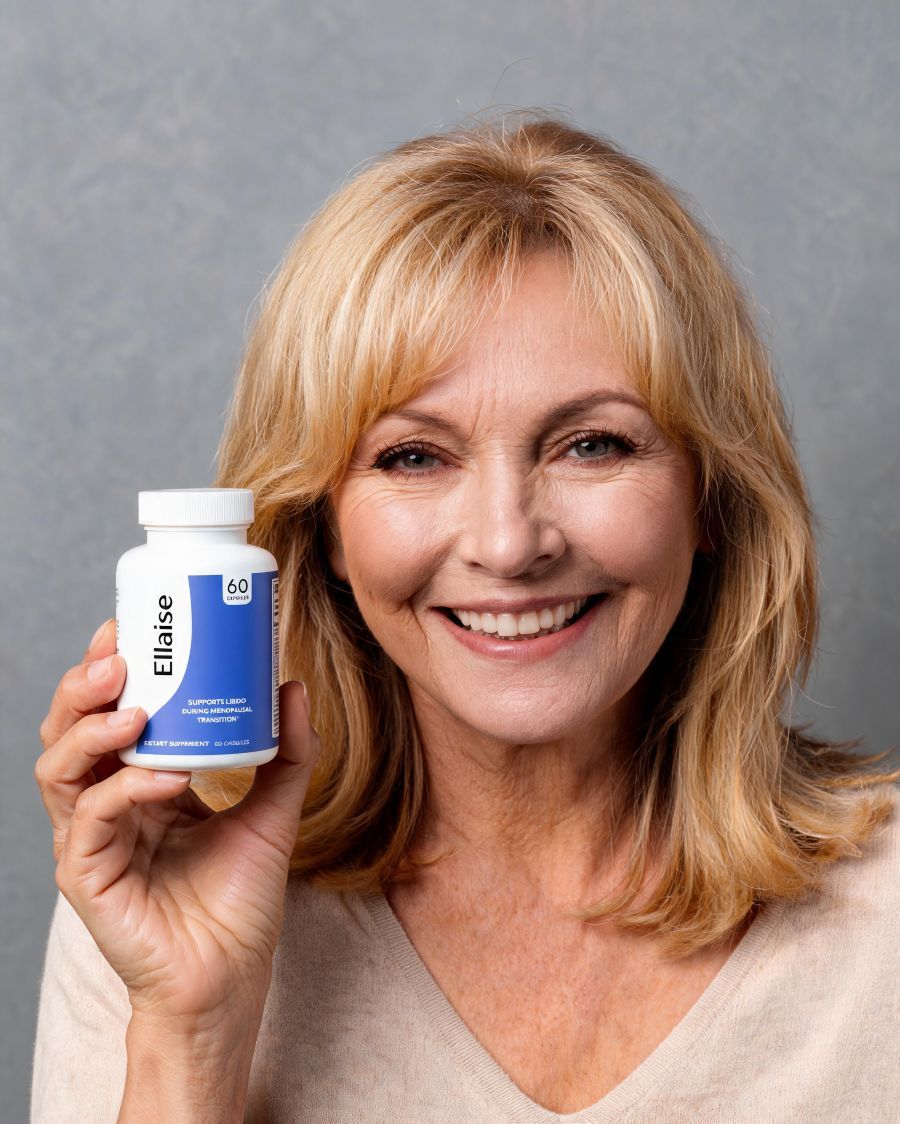
I'm not really sure how to write this so I'll just try.
I'm 45 and I've probably been in peri since 42 or 43, looking back. The change in my libido was the part that scared me the most. Sex used to be something I really enjoyed and looked forward to. Then I started feeling almost nothing during it, and after a while I started avoiding it because the difference between how it used to feel and how it feels now was making me sad.
My husband has been kind about it. That somehow makes it worse. I'd rather be fighting about it than seeing him try to be okay with not being touched.
I tried a couple of things over the past year and a half. Some adaptogen blend, a pelvic floor program, an herbal thing my friend recommended. I think they all helped a little with general stress but nothing reached the actual problem. I'd already started telling myself this might just be permanent.
Ellaise was the next thing I tried. I'm not going to claim it's a miracle, I don't know what it is. What I can tell you is that I've started feeling something again during sex. Not full-on arousal but a sensation, a little warmth, where there had been nothing for a long time. The first time it happened I almost held my breath because I didn't want it to go away.
I haven't told my husband I'm taking anything. I want to see what happens for another month or two before I say anything to him.

I'm 47, peri since 44. Libido didn't just drop, it ghosted me. Tried maca, ashwagandha, two different libido gummies, a $94 tincture from a naturopath that tasted like dirt. Nothing worked. I'd see ads for this stuff and laugh.
Bought Ellaise because my coworker wouldn't shut up about it. Took it for 10 days, felt nothing, was already drafting the "told you so."
Then last weekend we were watching a movie and I caught myself looking at my husband's hands. Just looking. And I had this little flicker. Like, oh. there she is. Not fireworks. Not jumping him. Just a thought that came from MY body for the first time in years.
I went to the bathroom and almost cried.
Idk if it's the supplement or placebo. I genuinely don't care anymore. Something is happening and I'm not scaring it away.
Not the Company I Expected
I sent them an email.
Basic questions. Very direct.
What was in it. How it worked. Where the research came from.
I presented myself as a cardiologist.
I was half expecting silence.
Or maybe a generic reply.
Instead I got a personal response.
Someone had actually read my email and took the time to elaborate.
And, at the end of it, an invitation to meet them in person.
That really surprised me.
I read it twice.
Supplement companies don't do that.
They don't invite skeptical cardiologists to come look behind the curtain.
I wasn't sure what to make of it.
But they were based in Pennsylvania. Same state as me.
They had said whenever I had a free day.
I thought about Eleanor.
And I decided why not.
Meeting them in person
It was a Tuesday afternoon.
I still remember that day well.
I had a free slot and Pittsburgh wasn't far.
I drove there myself. No real expectations.
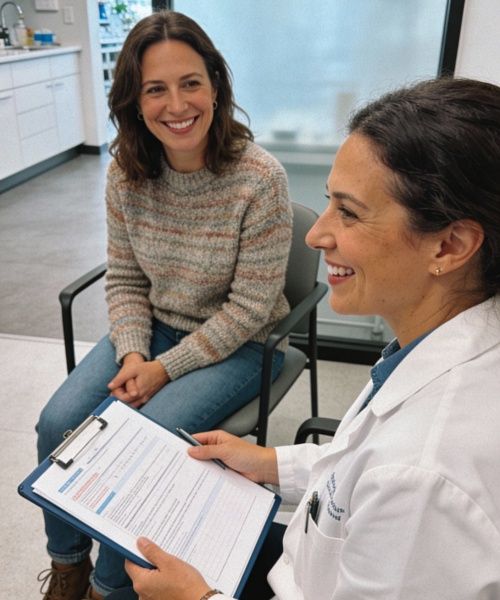
Just curiosity and an hour to spare.

The building was ordinary from the outside.
Just a modest logo on a facade.
It looked like a dozen other buildings on the same street.
But inside it was different.
A working space. Clean and functional.
People moving around desks.
A lab behind a glass partition.
A couple whiteboards covered with notes.
Someone came to greet me and walked me through the office.
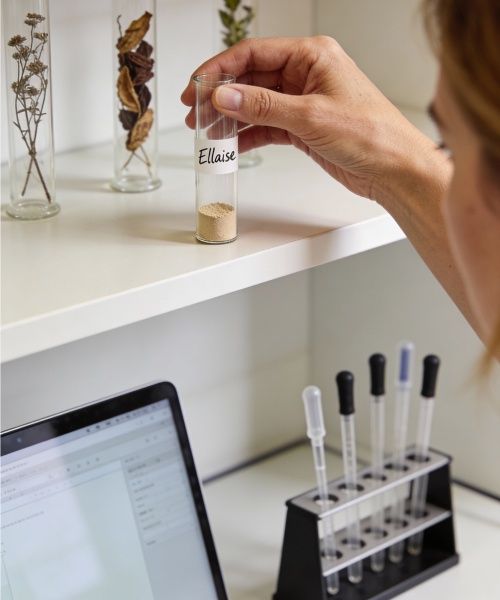
Straight into the lab.
Equipment on the benches. Samples being processed.
The people I was meeting were already there.
We introduced ourselves standing up.
The first thing I noticed was that they all came from somewhere else.
Dr. Laura Mitchell. Physician. Years in clinical practice.
David Reiss. Pharmacologist. A decade in clinical trials.
Dr. Nina Patel. Researcher. Left a university position to work on this full time.
And several others.

I asked why they had left.
The answers were different. But the thread running through all of them was the same.
They had kept hitting the same wall.
Women coming to them with a real problem. And nothing real to offer in return.
At some point they had decided that wasn't good enough.
They heard or got presented to Ellaise. And they made the jump.
Then I asked the question I had actually come to ask.
"Why did you develop this?"
Dr. Mitchell answered first.
"Because nobody else was going to"
They had looked at what existed. The products on the market. The research being ignored.
Nobody was taking this seriously. So they did.
Does the Science Actually Hold?
So I asked them directly.
How does it work?
Nina started explaining.
She started from the cause.
How testosterone drops. Estrogen. Blood flow.
The body becoming less responsive.
And stress suppressing everything else.
And I realized that was exactly what I found myself.
The spark. The fuel. The oxygen.
I've never heard a company talk about it.

So I pushed further.
How do you fix it?
She explained it to me for an hour.
Remember the fire? It came back to the same three things.
She used different words but the underlying concept is the same.
The spark. The fuel. The suffocation.
How Ellaise Works
Let me translate it into what we already talked about.
The spark
The first piece is getting the brain to want sex again.
For that, testosterone needs to go up.
Three ingredients work on this together.
Epimedium tells your body to produce more of it.
Longjack unlocks the testosterone already in your blood.
It's there, but inactive. Not doing anything. Longjack sets it free.
Ginseng keeps the production going.
More testosterone reaches the brain. And the signal comes back.
The wanting starts again.
Longjack is tricky. Purity matters a lot.
If it's not pure enough, it doesn't work at all.
Most products use the cheap version.
The fuel
The second piece is making sex feel good again.
Restoring body sensations.
Feeling something when he touches you.
Having intense, pleasurable orgasms.
Blood flow needs to increase down there.
Epimedium and L-Arginine work on this together.
More blood flow means engorgement comes back. Lubrication. Sensitivity.
And then there's L-Phenylalanine.
It's a natural protein. It helps the brain notice pleasure.
So the brain remembers sex is worth repeating.
And starts wanting it again. On its own.
Most companies don't include L-Phenylalanine.
But without it, you wait longer. And feel less.
And the suffocation
Cortisol needs to come down.
As long as it's high, it suppresses everything else.
Maca, Longjack and Ginseng bring it back down.
The stress response settles.
And the fire can finally breathe.
These ingredients exist.
The hard part is combining them.
The right form. The right dose. The right purity.
It requires real testing.
And that's what makes a supplement effective.
How they built it
I had run out of scientific objections.
But I wasn't done.
I wanted to know the story behind it.
How long it took. What they tried. What didn't work.
So we kept talking.
They didn't start with a formula.
They started from a list of ingredients. Ingredients pointed by research.
The first combinations didn't work as expected.
Inside a formula, a proven ingredient can stop working.
Seventeen formulations. Before something was worth testing.
17 attempts that didn't make it out of the lab.

Then they started testing on women.
Real women in menopause.
The first test group showed partial results.
Some women felt something within weeks. Others felt nothing for months.
They adjusted ratios. Retested.
Four testing rounds. Over 200 women.
Sourcing was its own problem.
Studies use one form. Supplements usually use another.
Longjack only works in a specific extracted form.
Most suppliers don't do it.
They reached out to forty-three suppliers. Only three met their standards.
In total it took two years.
And over four hundred thousand dollars in research.
My Experience with Ellaise
What I'm about to tell you is my honest experience.
The results have been real. It also didn't happen overnight.
I am not going to lie to you.
You've probably been disappointed before. I'm not going to add to that.
And as a doctor, honesty is my core principle.
I'll tell you what I really felt.
Nothing more. Nothing less.
I left Pittsburgh with six bottles in my bag.
I heard enough to try.
I started the next morning.
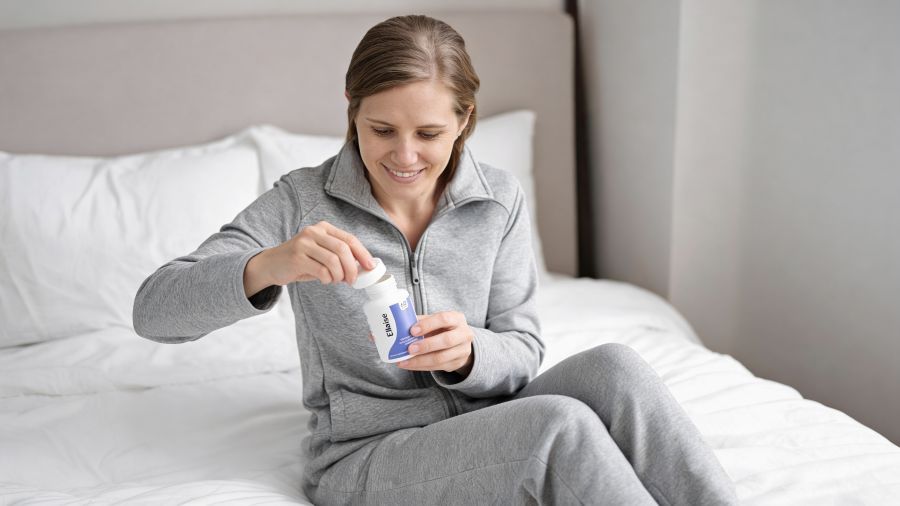
Two capsules a day. One with breakfast, one with dinner.
It's a quick addition to my routine.
The effects came gradually.
Not really a switch. More like a dawn.
The first two, three weeks were quiet. Nothing dramatic.
But I caught myself feeling attractive.
It built gradually.
But it was consistent. And noticeable.
I could feel something was actually changing.
Like a subtle fog lifting.
And then one day, out of nowhere, I thought about sex.
I thought about my partner.
And I was genuinely aroused. Physically and sexually.
After two years of almost nothing.
And month after month, thoughts kept coming. More and more.
I started being attracted to my husband. Again.
Energy slowly rising. Week after week.
We started having more sex.
Orgasms returning. Becoming deeper and more intense.
Waves of pleasure I had forgotten.
I could get wet without a ton of effort.
It felt like… falling in love with my husband again.
Like when we first started dating. Almost twenty years ago.

And then one day I paused in front of the mirror.
It was around the fourth month.
And I really just stopped.
I thought about where I was a year ago.
It felt like a different life.
I feel clear headed, less anxious, happier.
I love getting naked.
I like getting touched. It turns me on.
I see my husband with totally new eyes.
I can have sex without effort.
I enjoy it. Every minute of it.
My body is lubricating like before.
I can definitely orgasm now. Like I used to.
It feels like the best sex of my life.
Better than my thirties and even twenties.
I am the happiest I've been in years.
That simple joy and appreciation I felt when I was younger.
Every daily moment tastes better.
My husband feels it too.
Something that was slowly going cold is warm again.

I feel safe in my own body.
I feel like a… whole woman.
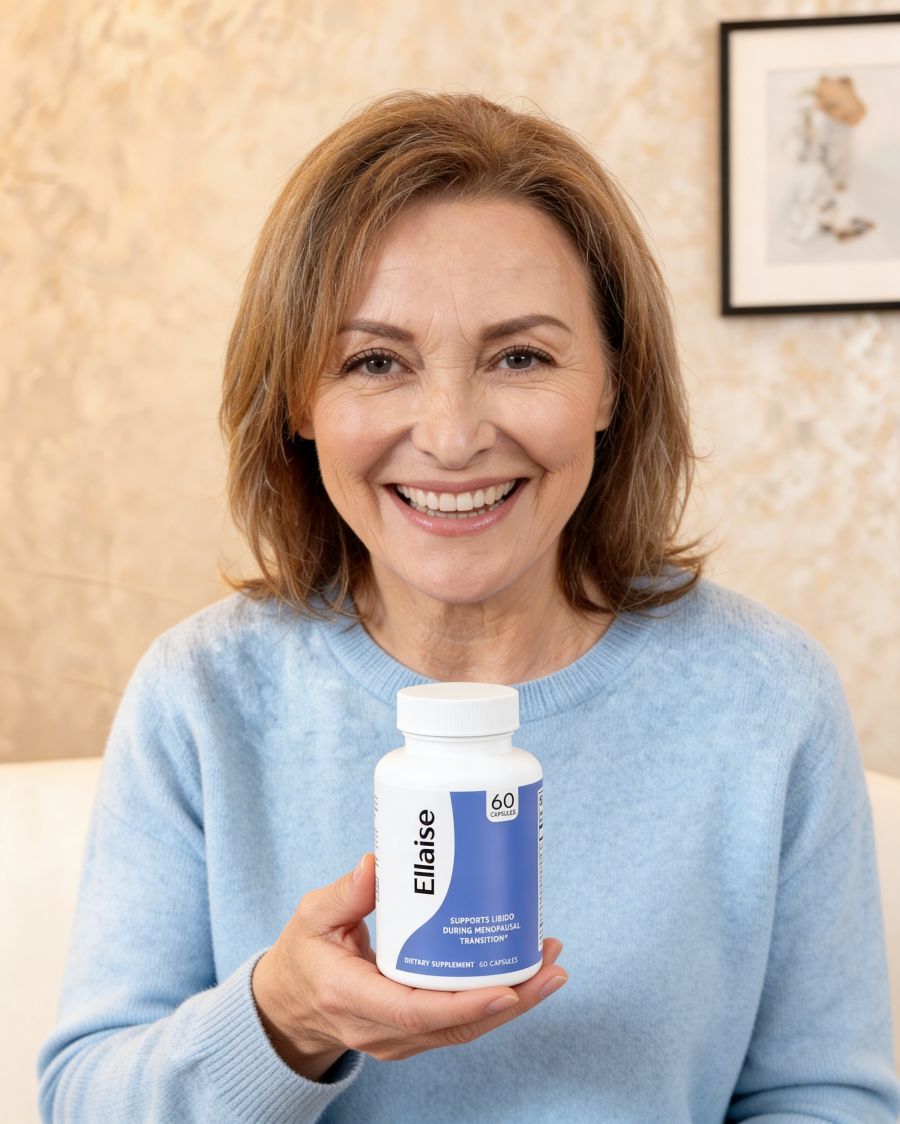
It was gone for about six years. Properly gone. The kind of gone where I'd accepted it and stopped looking. Started Ellaise last spring because a woman I know wouldn't drop it.
A few weeks in I had a thought about my husband in the middle of the afternoon and laughed out loud at my desk because I genuinely couldn't remember the last time my brain had done that on its own. Then it started happening more. Then it wasn't just thoughts, I'd actually look at him across the kitchen and feel something. His arms, mostly. I hadn't noticed his arms in maybe a decade.
The first time I reached for him at night I think I startled both of us. He's the one who used to initiate everything and I'd find a reason to be too tired. Now I'm the one waking him up in the morning. Last weekend I asked if we could do something on a Tuesday, which we never used to do, and he made the kind of face you make when something good is happening that you don't entirely trust yet.
The orgasms are sharper than they were even before all this started. I'm 54 and they're better than they were at 40. I don't really know what to do with that information except enjoy it.
The other thing I'll say is I'm getting wet without effort again. I'd forgotten that even used to happen on its own. I had to look up if that was a normal thing to come back because I genuinely couldn't remember.
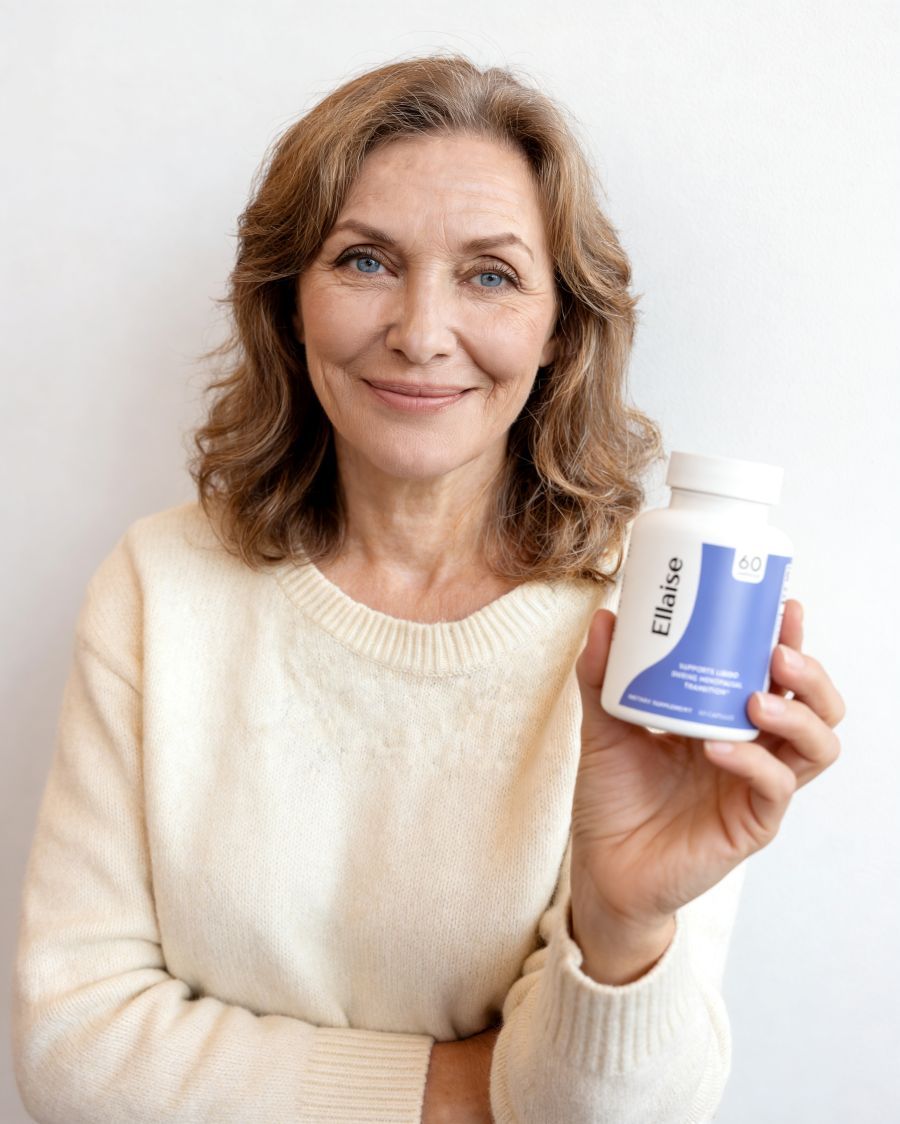
I started Ellaise last March.
The sexual thoughts came back first, in small ways. Looking at my husband when he walked out of the shower, which I hadn't done in I don't know how long. Then I noticed I was looking at myself differently too.
I feel more confident. I'm wearing things I'd stopped wearing. I'm walking differently. I enjoy getting dressed now, watching how clothes fit on me, taking my time with it. I'm wearing perfume again. I'm catching my reflection in store windows when I walk past. I let my husband see me when I'm getting changed, and I let him look. I bought lingerie last month for the first time in I don't know how many years and I bought it more for me than for him. My body feels like mine again.
Sex has changed completely. I want it. I'm wet without trying and the orgasms are the real ones. Last month my husband told me I looked at him a certain way across the kitchen and he didn't know what to do with it. I knew exactly what way he meant.
I feel like a woman my husband would want to sleep with. More than that, I feel like a woman I'd want to sleep with.
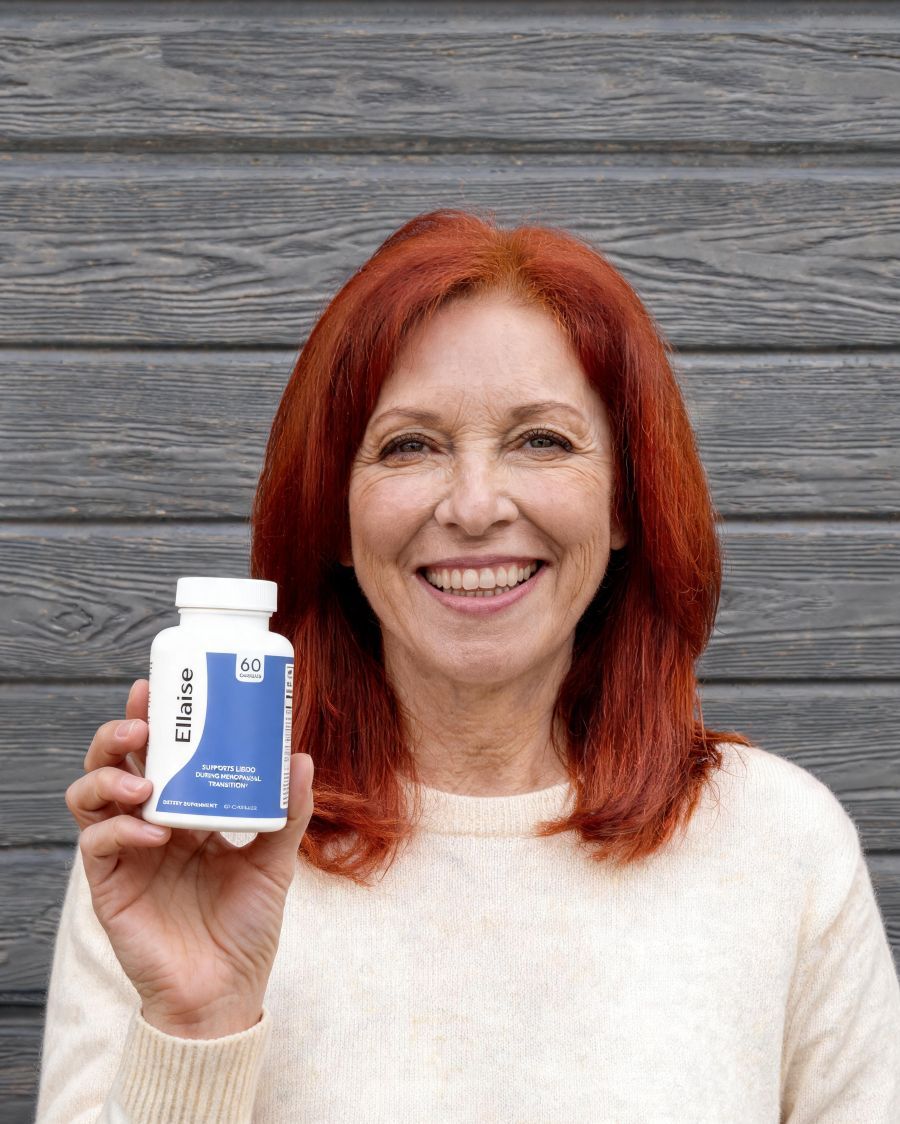
I've been taking Ellaise for about eight months now.
The thing that's hardest to explain is how much of this lives in my head, not in my body. The desire is back. I mean really back. I'll be doing something completely unrelated, paying a bill or driving, and my brain will produce a sexual thought all on its own. That hadn't happened in years and I'd forgotten how much background noise it actually was when I was a normal-functioning person. I'd fantasize again sometimes when I was falling asleep. I'd notice attraction to actors I was watching on TV instead of the screen being just a screen.
The horny-teenager comparison feels too strong for me, I'm not climbing the walls, but I'm definitely a person who wants again. I think about sex during the day. I think about my husband specifically. I look at him sometimes and feel the kind of feeling I'd assumed was just over for me.
The sex is good too, the physical stuff works, the orgasms are real. But the part I'd been mourning was the wanting itself. I have it back.

For a while it actually got worse than numb. His hands on me started to feel almost unpleasant, not because of him but because my body had stopped knowing what to do with the input. I'd find myself shifting away from his touch and then feeling guilty about shifting away. Sex was something I was doing to maintain the marriage, not something I was participating in. I'd lie there and wait for it to be over and try to figure out when it had become that.
Ellaise has been about ten months for me now.
I can feel things again. That's the simplest way to say it. My husband's hands, his mouth, my own hand, all of it registers. I'm wet without having to work at it, which I'd forgotten was even a thing that used to happen on its own. The orgasms come on their own too, and they're real, not the watery little versions I'd resigned myself to. Sex went from a thing I was performing to a thing I was actually inside of.
The libido part has caught up. I think about sex during the day. I want it instead of agreeing to it. I look at my husband across a room and feel something instead of nothing. Last week I initiated on a Tuesday afternoon when the kids were at school, which is a thing I would have called impossible a year ago.
I have my body back. The one I'd had a good twenty-year run with before peri took it from me.
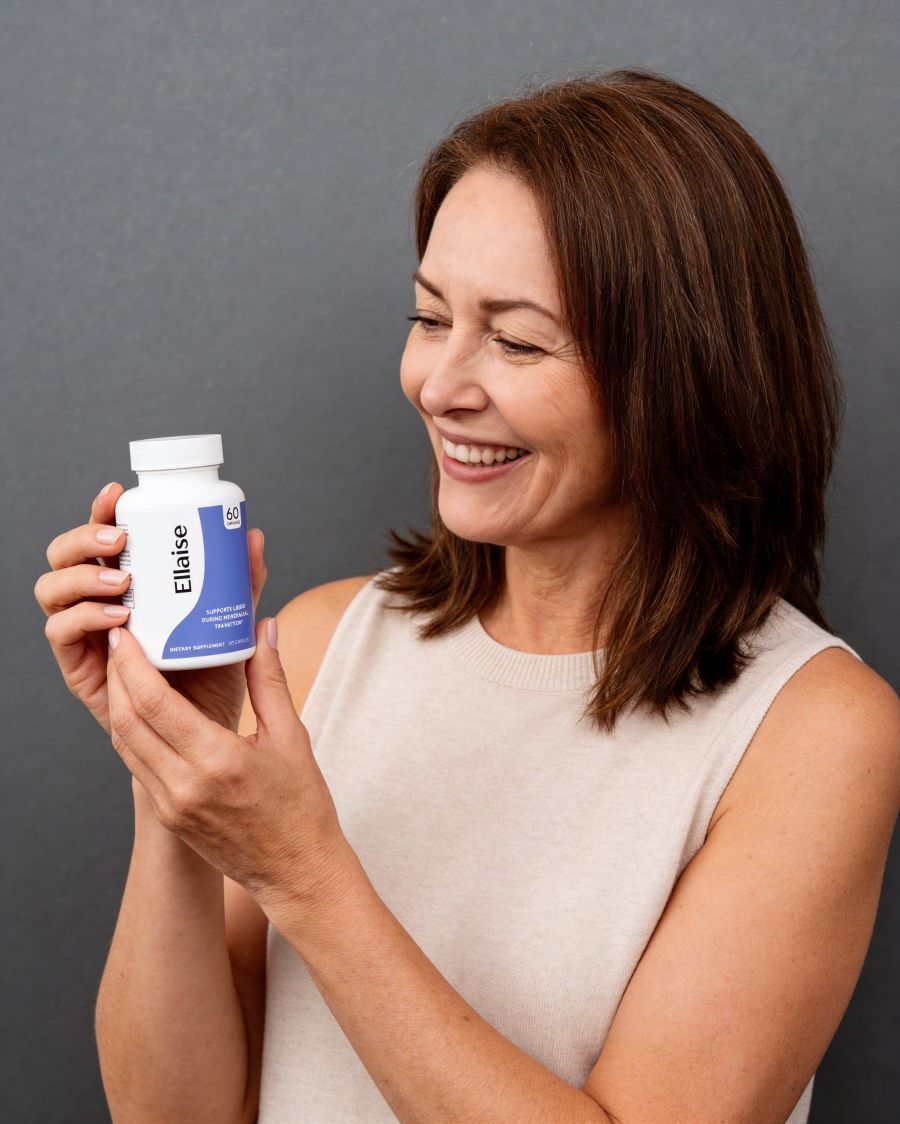
My husband and I had been together 24 years when peri hit me at 47. I went from a person who initiated sex to a person who flinched when he touched my shoulder. I'd cry afterward sometimes, in the bathroom, because I knew he could feel me pulling away and I didn't know how to stop doing it. He never made it a big thing. He was patient, which I'm grateful for, and also which made it harder because there was nothing to fight about. We were just slowly becoming roommates and we both knew it.
I started Ellaise just over a year ago.
The libido has come back in the ways I think you're hoping it would. I want sex again. I think about it during the day. The orgasms are real and the physical part works, all of that.
But here's what I actually want to say. We talk again. We touch each other in the kitchen for no reason. He puts his hand on my back when he walks past me and I lean into it instead of stiffening. We had a slow Sunday morning last month where we didn't even have sex, we just stayed in bed and talked for two hours, and I cried a little because I'd forgotten what that felt like. Sex with him isn't a transaction I'm performing anymore. It's something we do together because we both want to.
I got my marriage back.

A little over a year on Ellaise has changed that.
I'll talk about the physical side first because that's what I notice most. I can feel things again. I can feel my husband's mouth, my own hand, the difference between fabric and skin, all of it. I'm not sure how to explain that to someone who hasn't lost it, but if you've lost it you'll know what I mean. I'm wet without working at it. Sex doesn't hurt anymore.
The orgasms are better than they were even before peri. I had one a few weeks ago that I'd describe as the kind I used to read about and assume other women were exaggerating. My husband asked if I was okay afterward. I had to laugh because what was I going to say, I'm great, I just had the orgasm of my fifties.
The libido is back too. I think about sex during the day. I want it. I initiate. But what I tell my friends about, when this comes up, is the sensation. That's the thing I had stopped believing would come back.
My Honest Recommendation
Ellaise made me feel sensations I truly missed.
That's why I am sharing this story. With my name on it.
I already recommended it to personal friends.
Those who opened up to me about the same pain.
And if your story sounds like mine, I believe it can work for you too.
I've looked. Nothing like this exists on the market.
Built for us. Taking the science seriously.
It makes your body respond again.
It makes fantasies return.
It makes you feel attractive. Sexy.
It makes you more joyful.
This problem doesn't fix itself.
For most women, it gets worse.
Sensation keeps fading.
The dullness gets deeper.
Your mood drops.
You feel less attractive. Sadness sets in.
And before I tell you to try anything, I have to be sure it won't hurt you.
So I asked them for the data. And I read it carefully.
This is what makes it safe:
I'll add a note on costs too. Because they matter.
Sex therapy runs you thousands of dollars. Months of weekly sessions.
Supplements look cheap until you try five brands. And none works.
Women spend thousands on bottles that fail them.
Over multiple years of failed attempts.
Ellaise is made for our biology. Not borrowed and relabeled.
They actually studied our problem.
The ingredients aren't the cheap version.
Most companies use what's easy to source. They didn't.
And I've seen it work. On myself and on women like me.
This is what I'd tell a friend to try.
If your story sounds like mine, give Ellaise a shot.
Risk-Free for 9 Months
You have 9 months to try Ellaise. If it didn't work for you, here's what you do:
- 1Contact our support team.
- 2They will give you an address.
- 3You send the empty bottles to that address.
- 4We refund every dollar you paid.
No questions asked.